
Summer is waning, and there are so many good-byes to say. We walk down the North Ridge trail on Champlain Mountain in Acadia and a lone cricket is sounding loud and long. It is October, and my thoughts are “Good-bye, dear cricket, you will be dead soon”. I am not getting any younger myself, but I am grateful to live more than five or six months.
Saying goodbye is part of every day for me right now. The welcomes will come later.
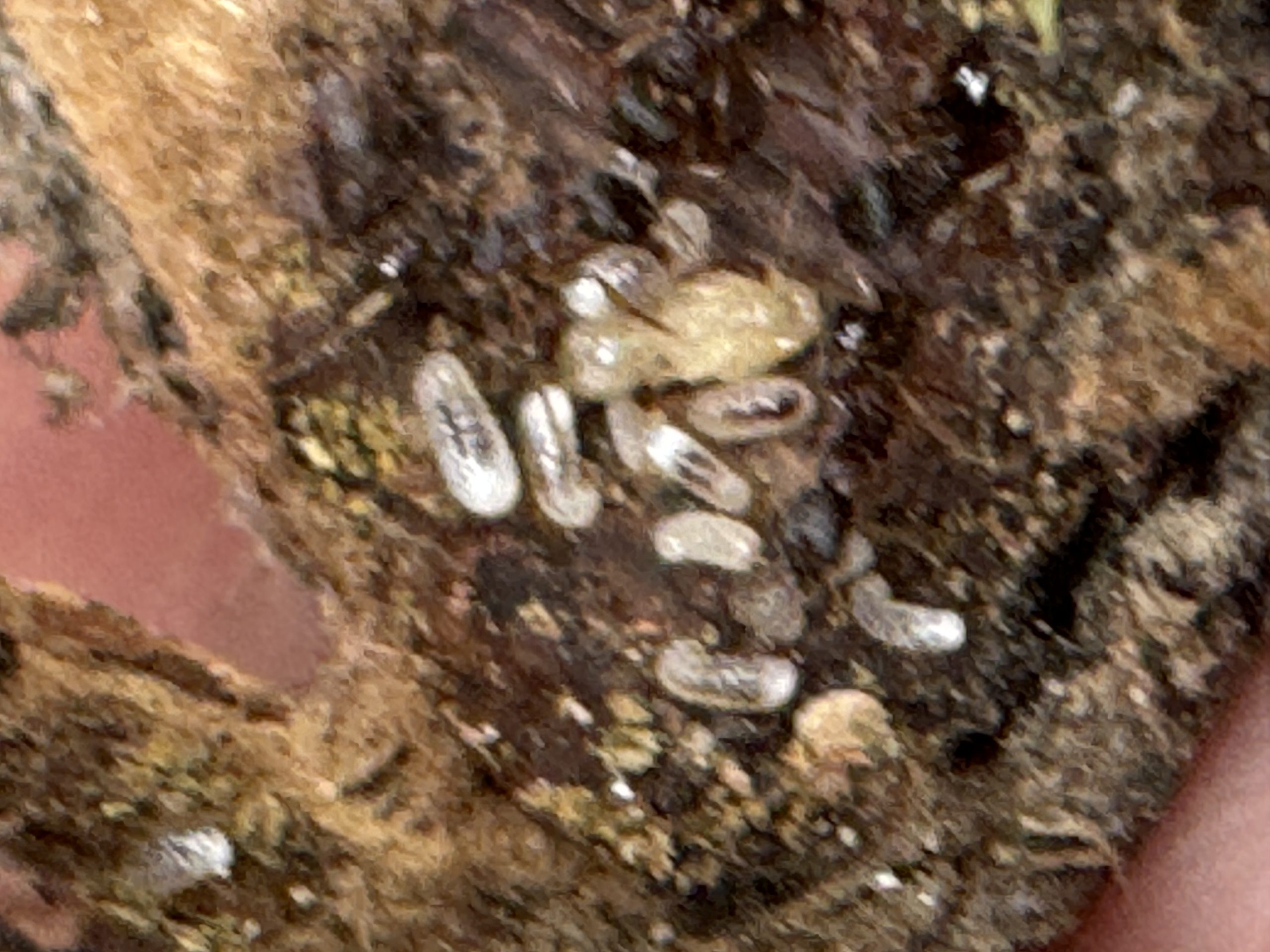
I watch the ants moving around on their mounds. We have many different species here in Maine, but most do not like to be out and about in the winter. When temperatures are below 50°F I like to say they head south. Ants do not migrate though, they just head to protected spots to enter diapause, a period of slow metabolism and rest. Some will go underground to stable, warm, winter tunnels. This is often below frost level, but is not always the case. Teeny tiny Temnothorax ants can spend a winter in the shell of an acorn. I had heard that this happened, but it still did not seem possible. An entire ant colony living in an acorn? Over 100 ants? But then I saw it, and so now I believe it.
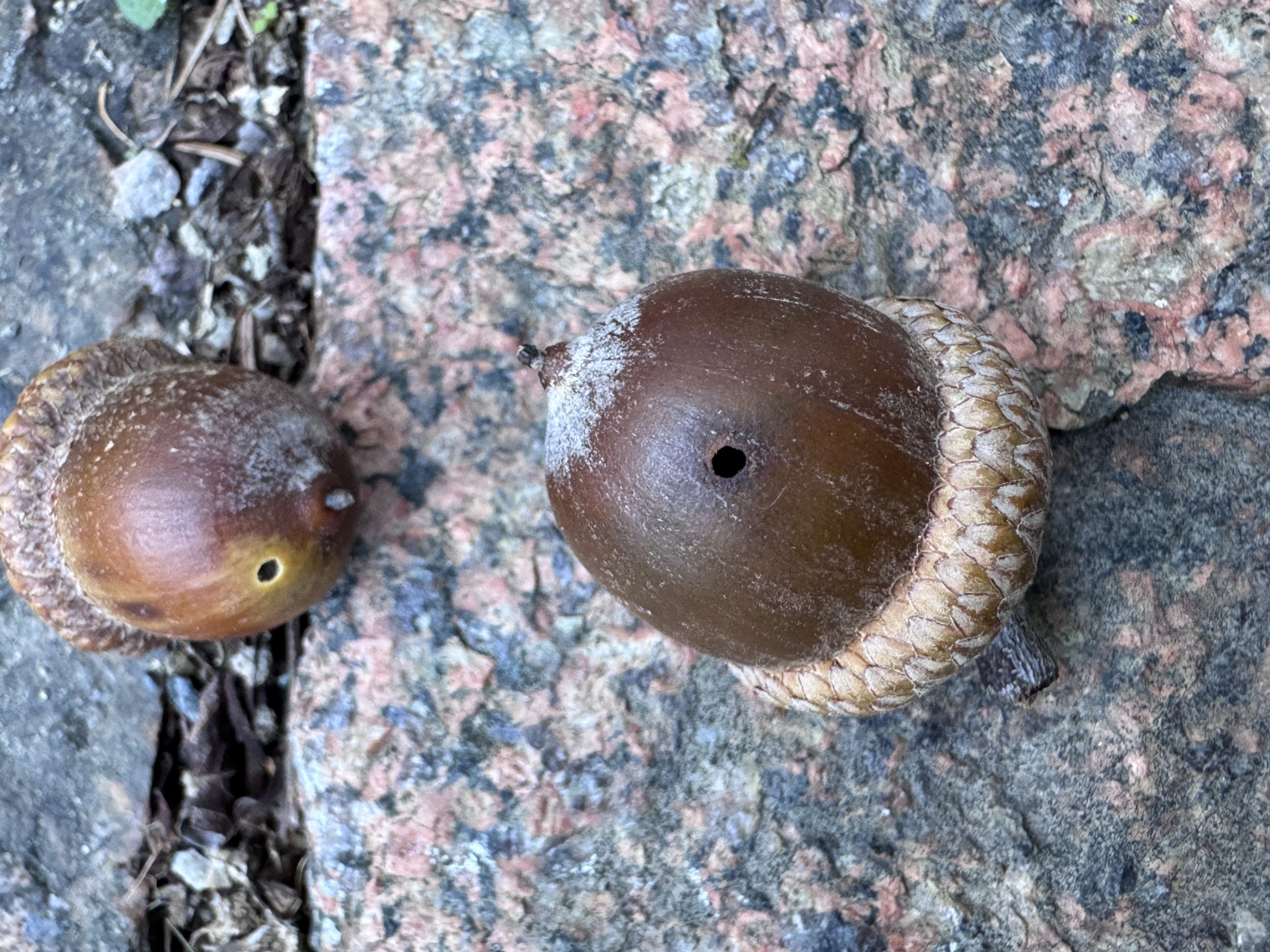
I was leading some walks in Camden State Park, talking about finding weevil exit holes and picking up acorns and looking for them. This is a fall habit of mine. I love to see the tiny perfect circular holes with ragged chew marks on the edges. I picked one up, and it fell open in my hand, revealing a score of very small ants and their equally small larva. We all watched them scurry long enough to take a quick blurry movie, then pressed it back closed and set it down again along the trail.
The ants are getting the better of this deal in my opinion. They not only get a prefab house, but show no appreciation for the weevil larva that made it. Long before finding the ants in the acorn I had read Doug Tallamy’s book The Nature of Oaks. It inspired me to watch a few weevils drill their way out of the acorn where they had spent their life. The first soft, pale, writhing larva I saw was enthralling. I photographed it, hummed to it, and set it gently in a shallow cup to return it to its mother tree.
I got prepared. Doug Tallamy had described how if you take acorns and have larvae emerge, you can lay them on the ground and they will wiggle themselves into the soil in less than a minute. I headed across the street to my neighbor’s massive oak tree, along with my larva in its saucer, a camera phone, and anticipation. I tipped the larva out, it started to wriggle, I grabbed my phone to hit record, and watched as an ant hoisted the creamy larva above its head and carted it away. Stunned, my first instinct was to rescue the larva. Then, internal self said “No, let nature take its course.” By the time I decided to intervene, ant and larva were out of sight.
I have been gathering acorns for a class I am helping with. We will look at exit holes, and send everyone on their way with their own acorns, and their own chance to watch larvae quickly wiggle into the soil, or not. We will also listen to a fall field cricket rubbing its wings together. There are crickets living between the rocks outside my back door. They come out and make songs, even in the daytime.The sandy openings they have built between the stone steps remind me of textbook pictures of Pueblo villages. If a shadow passes over them they retreat into the rocks, and into silence. It does not take long for them to emerge and start rubbing their wings again. Fall field crickets, Gryllus pennsylvanicus, and this is what they are, mate, lay eggs, and die as winter approaches. I have never seen their eggs although they must be near my steps. When spring and warmer temperatures return a new batch of baby crickets will appear in the same sandy colony, but now the chorus at my steps is quiet. The cricket I heard on the trail may be the last one I hear this year.
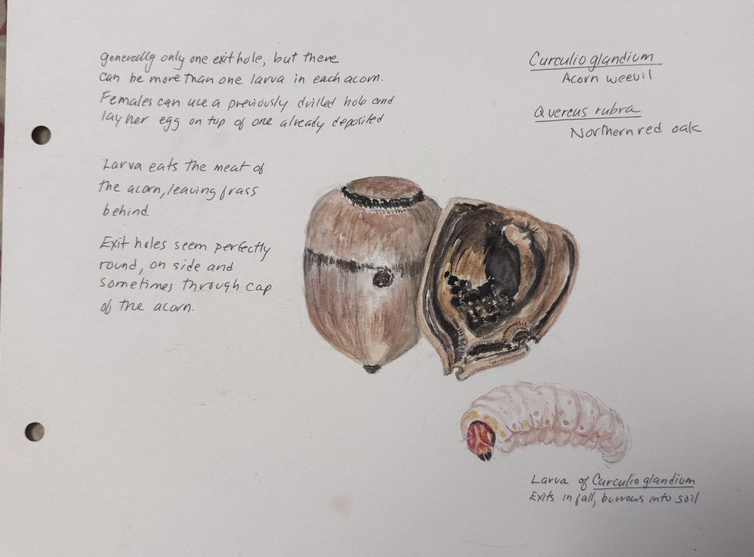
The weevils that escape being borne off by an ant will spend the winter, or even two, down in the safety of the soil. Ants slowly cease activity and enter diapause. I will not see them again till the temperatures are in the 50s. And the crickets? They will all die, after just one glorious summer season. I wish them all goodbye, and turn to see what the next season will bring.