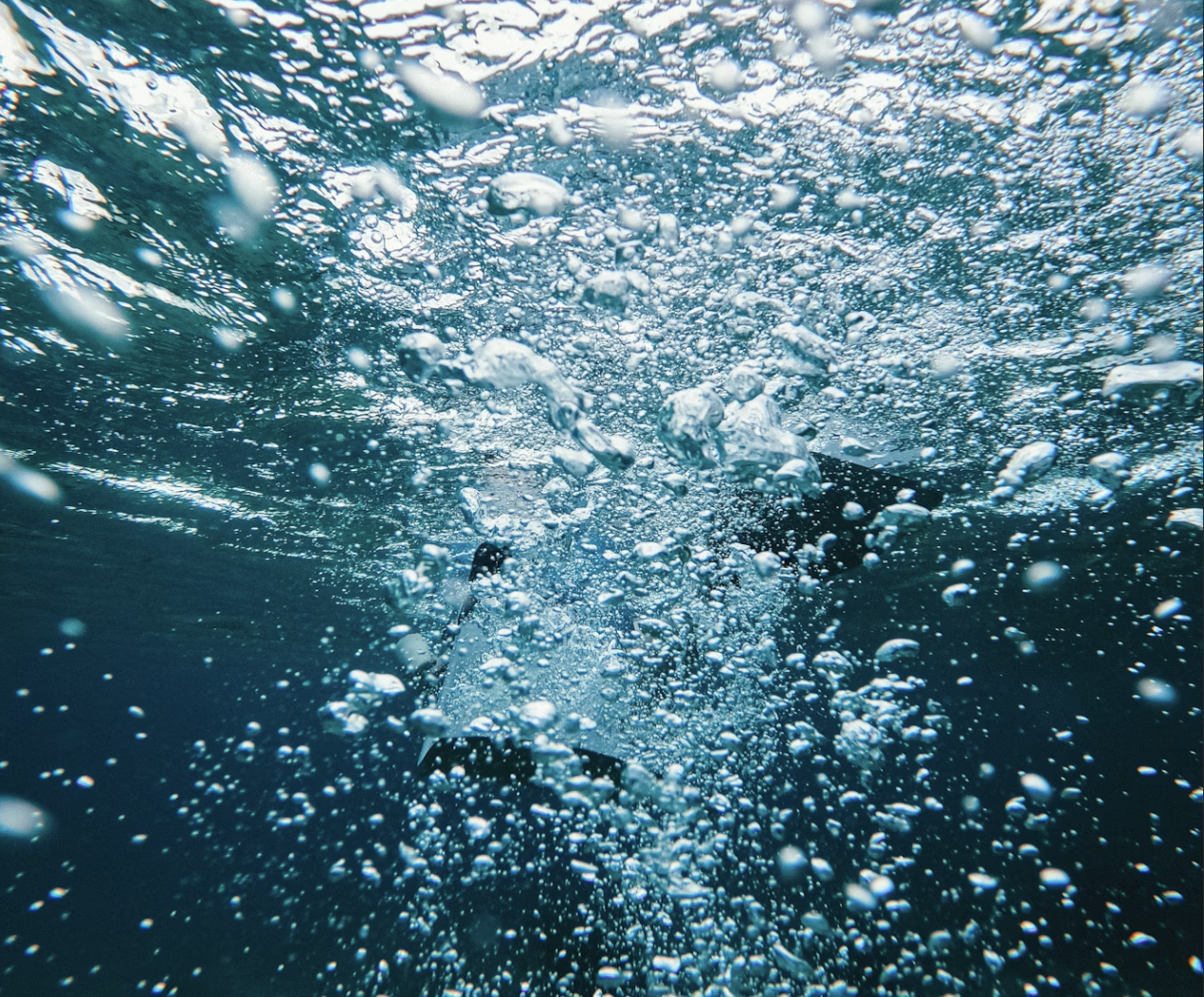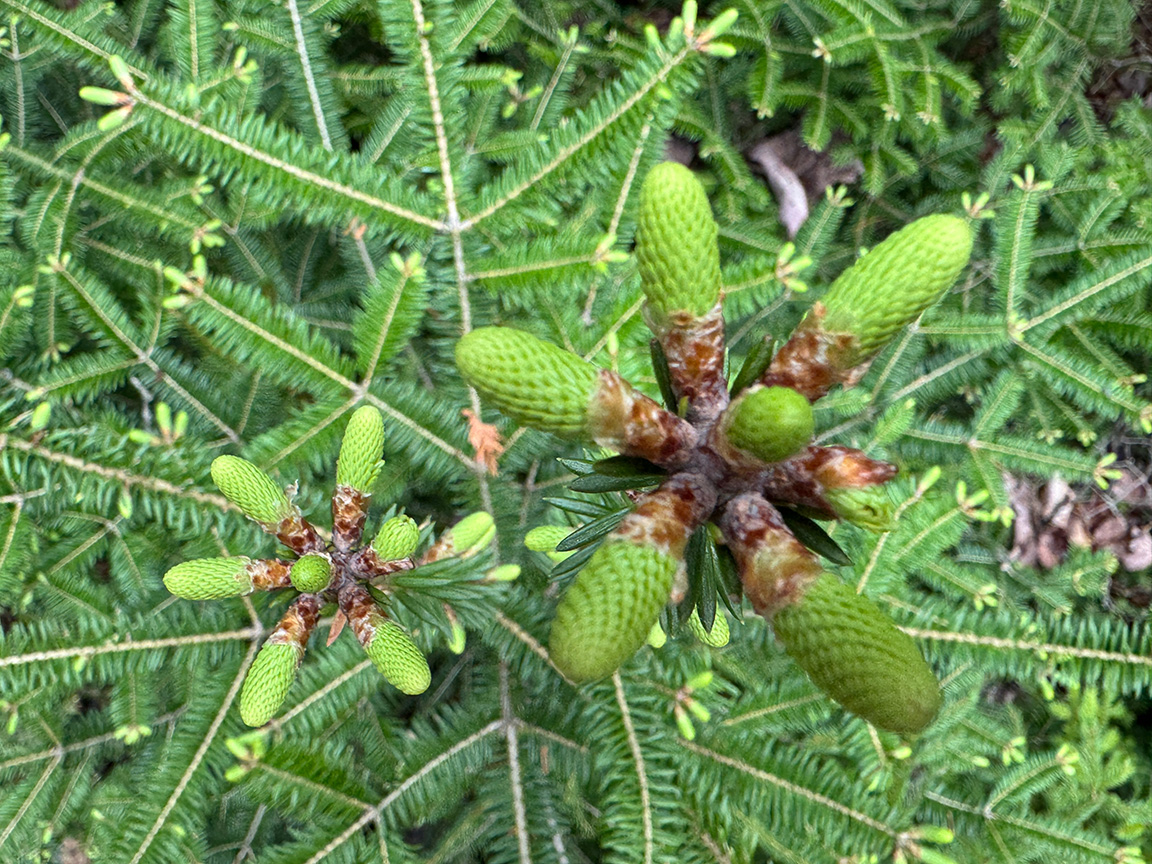
What do a munching caterpillar, a trembling leaf, a mud-mired snapping turtle, and you all have in common? Breathing. Without breath we have no life. There are many ways to breathe.
Phrases that involve paying attention to our breath abound. “Take a deep breath and count to ten,” we are advised, when stress pushes us towards anxiety or panic. “Close your eyes and count your breaths in four steps, like a box,” is a standard way to induce sleep.We breathe an average of 20,000 breaths a day. Some of those may help us nod off at night, but most are unnoticed. Turtles and trees probably do not notice their breaths, either.
Is an insect aware when air and oxygen enters its body? It probably isn’t counting breaths and hoping to sleep. It also is not sniffing that air and getting intoxicated by the a heady odor of a rose.The small openings along the side of their abdomens and thoraxes are called spiracles.These connect the outside of the insect’s exoskeleton to their trachea with thin capillaries. Mayflies are one of the few insects that cannot open and close their spiracles, they are just always open–no box breathing for them. Continuous air exchange is effortless, simple and peaceful.
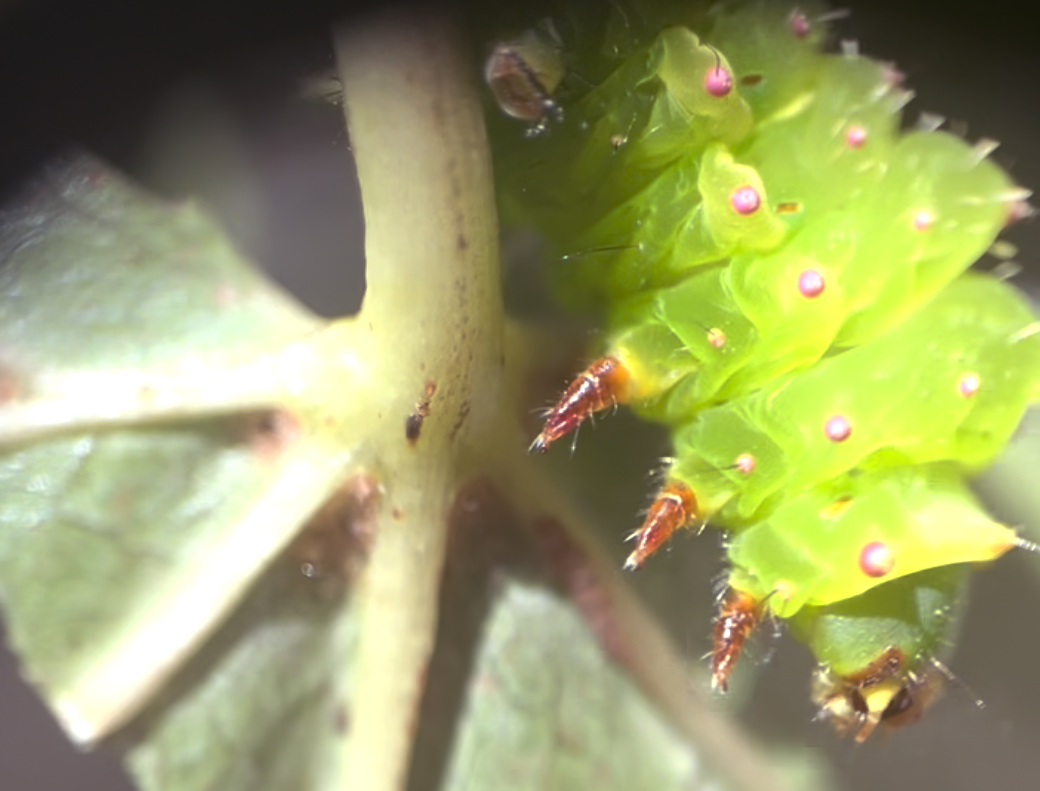
Most other insects have muscles around their spiracles. The striking rose-colored openings on a luna moth caterpillar are triggered to contract or expand by oxygen and carbon dioxide levels. If an insect’s spiracles are closed, and it uses up its oxygen, the low level causes spiracles to flutter rapidly. This allows air to enter, but prevents water from leaving and dehydrating the insect.
I have yet to see spiracles fluttering, but until then I can lower my eyes and drift mindlessly, breathing quickly in and out doing Butterfly Breath. This yoga technique is said to release sadness and promote emotional acceptance. Who knew what a butterfly had to share!
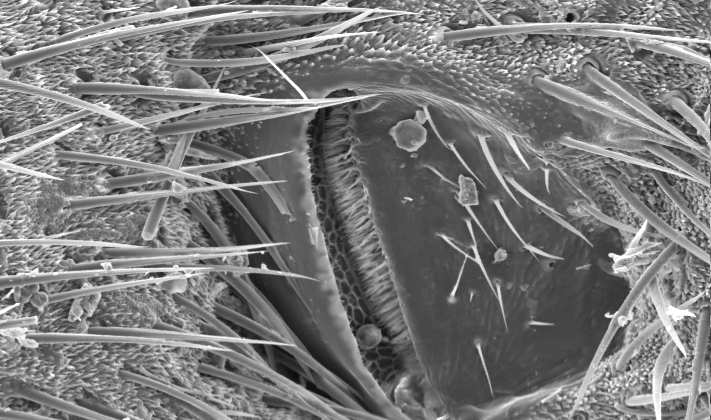
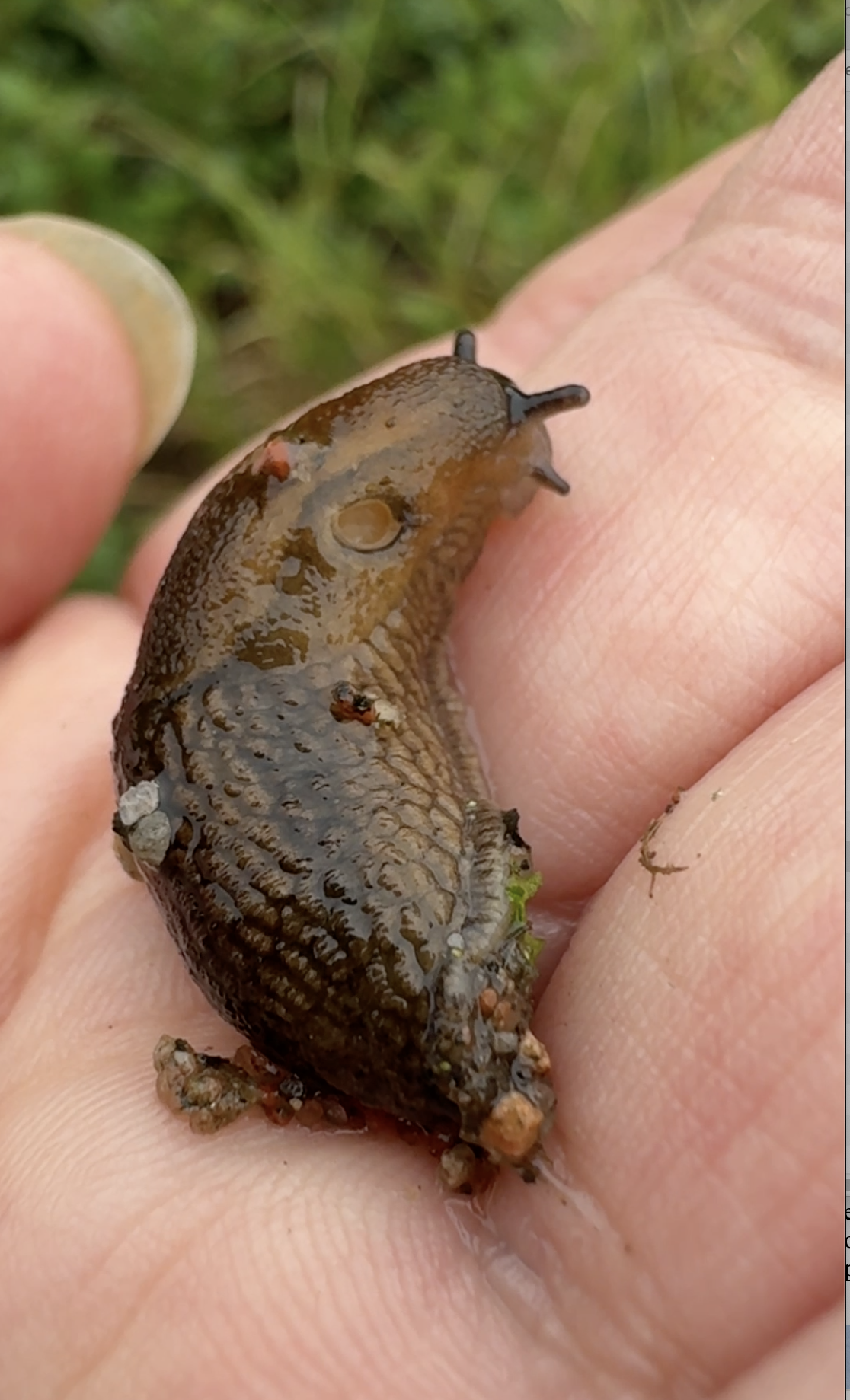
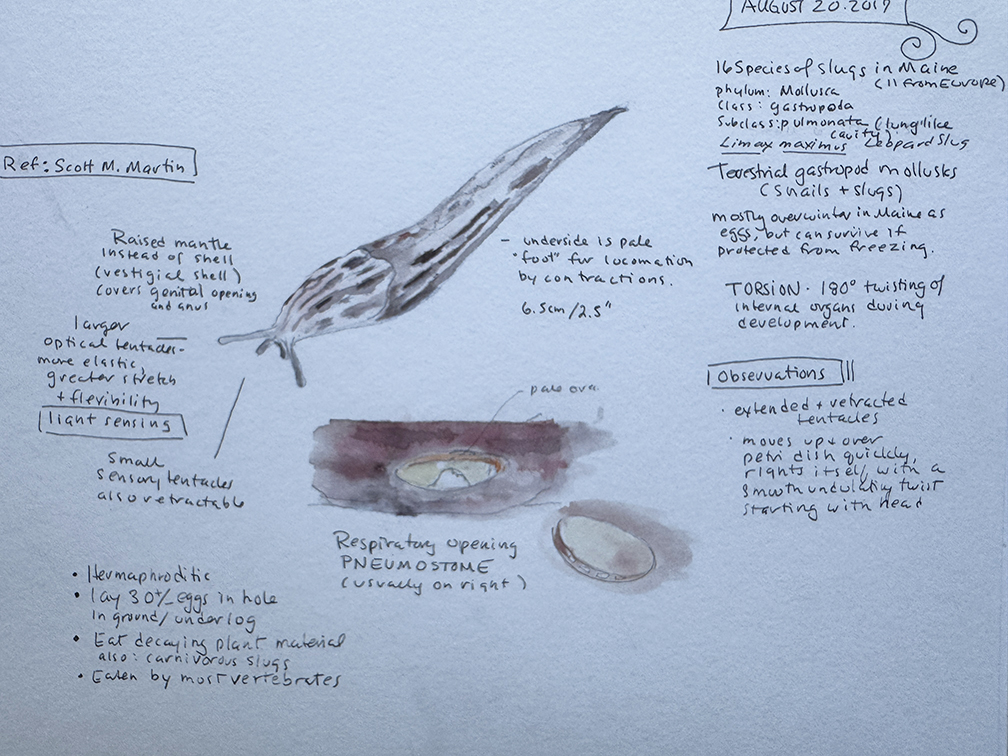
Completely opposite to a flutter breath is the slow, gradual, opening and closing of a pneumostome. This is the hole in the soft body of those oft-maligned terrestrial mollusks, slugs. It can be completely shut when it is raining as slugs, like us, cannot get oxygen from water and will drown. While they can hold their breath much longer than humans, sometimes over an hour, they avoid submersion. Escaping puddles is one of the reasons they will sometimes climb the walls of a house.
Holding a slug in my hand and watching it gently breath has given me a new respect for them. As a naturalist the almost daily discoveries of nature’s wonders fill me with marvel. I am sometimes giddy with it. The calm breathing of a slug resting on my palm had the opposite effect, and brings me to stillness. Nothing else exists. As slugs will also tightly close their pneumostome if frightened, I felt honored to have this fellow traveler seemingly content to be with me. If you wish, you can read more about my conversion to slug love here. If you have a slug nearby, share some time with it.
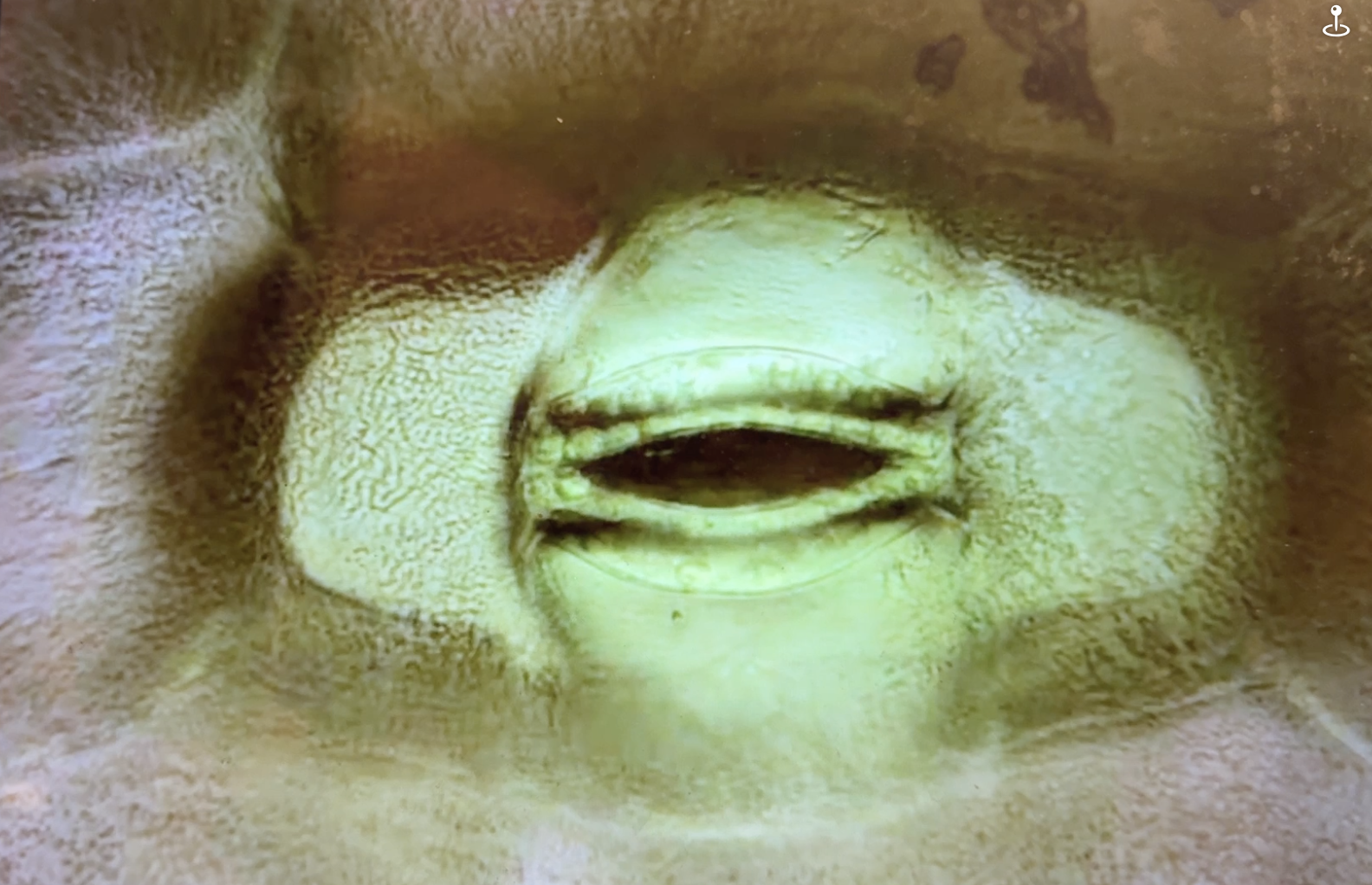
They start with the same letter, have three syllables, and a similar function, but insects breathe with spiracles, plants breathe with stomata. Fortunately for us, plants generally take in carbon dioxide and release oxygen. Often referred to as little mouths, stomata, which is the plural of stoma, are located on the lower surface of most leaves. Aquatic plants, since their lower surface is under the water, usually have their stomata on the upper surface. Grasses and vertical leafy plants have a similar number of stomata on each side.These tiny openings have two cells on either side called guard cells, which use water pressure to open and close each stoma. A time lapse image, condensing 250 minutes to 10 seconds, shows this process, and looks so much like a mouth it is tempting to paint in two eyes above it. See it here
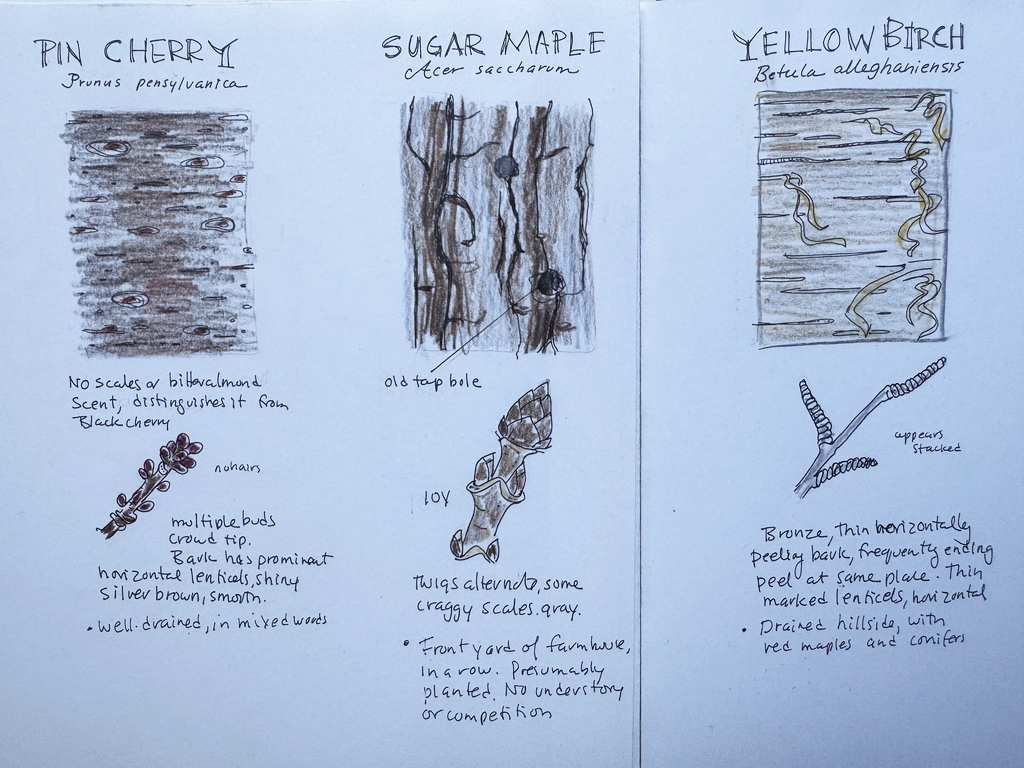
Plants breath in more than one way, unlike us. We have lungs. Air and oxygen go in our noses or mouths to those lungs. We have no back up plans. Trees and woody plants have lenticels, which are corky pores in the bark allowing for gas exchange, and unlike stomata they are permanently open. They supplement stomata, and help deciduous trees get through winter when there are no leaves. They are obvious in paper birch and cherry trees, as horizontal dashes. Poplar trees, (on Mount Desert Island where I live these are primarily quaking aspen Populus tremuloides, and bigtooth aspen Populus grandidentata),have lenticels that start as dashes, but become distinctively triangular as they age. On other trees they are almost impossible to find.
Living in still or slow moving water Ranatra fusca are also hard to find. Called brown water scorpions, (yes they are brown and live in water, no they are not scorpions), these insects have evolved two long hollow filaments at the rear of their abdomens. These half tubes bring air from the surface to their spiracles. Think of living your life underwater breathing through a snorkel! Sometimes up to three inches long, brown water scorpions move slowly, no flutter breathing, just hiding in grass along the edge of a pond waiting for prey to come its way. In the circularity of nature, water boatmen are its most common prey, yet the high-energy fast-swimming and breathing water boatmen will lay eggs on the slow moving scorpion. Swim away before you get eaten, little ones!
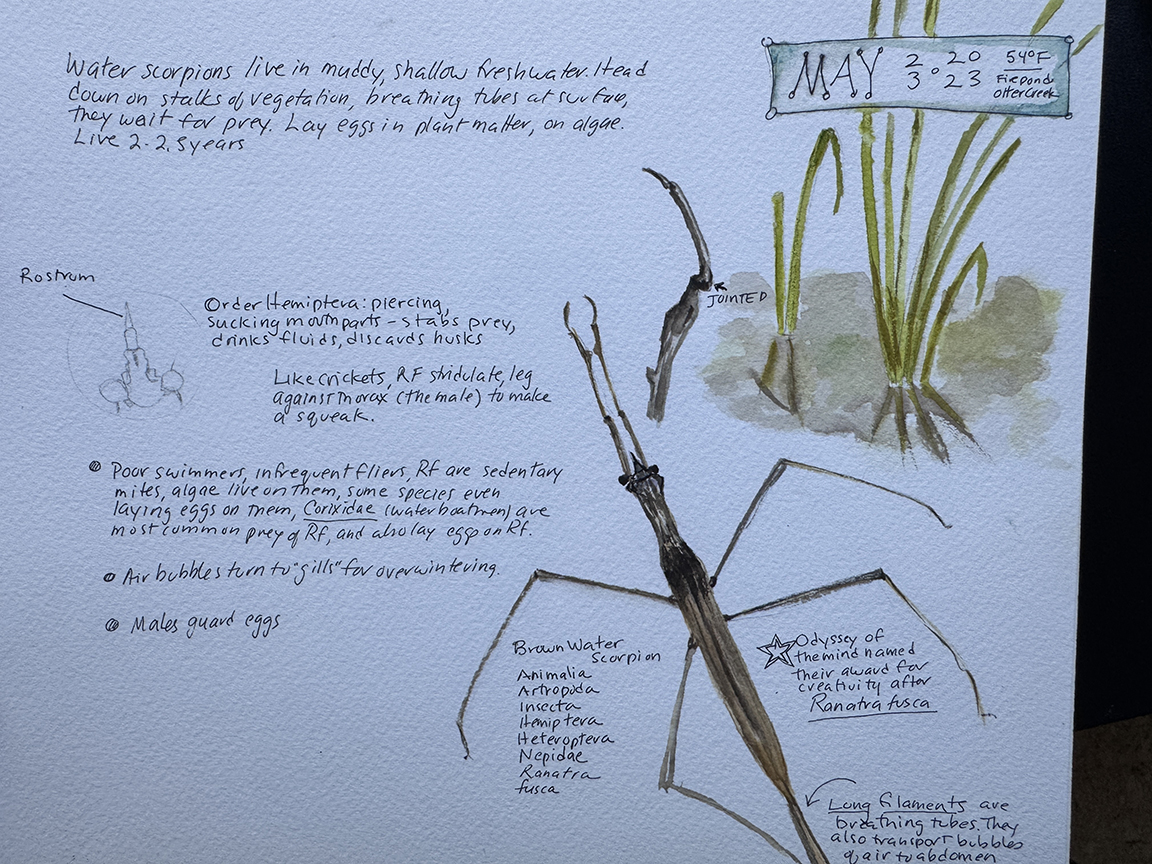
If the brown water scorpion dives deeper than its breathing tubes reach, it brings a bubble of air trapped in the hairs of a spiracle–its own scuba tank. Snorkel, scuba tank, that’s enough to be wowed by, but brown water scorpion breathing is even cooler than that. In winter when the surface is frozen and out of reach, the air bubble acts as a gill, and can pull a small bit of oxygen from the water to sustain it until the ice is gone. That is a lesson. Calm, steady breath. Wait. Be patient. Ice will melt, fresh air will come.
Underneath that ice another creature waits in stillness. Like the brown water scorpion, it lies motionless waiting for food to pass by. The common snapping turtle, Chelydra serpentina, spends the winter in a shallow, stable spot, deep enough to keep from freezing. These creatures, like us, breath air and get oxygen from that air. So how do they survive winter with their oxygen supply above the ice? They slow down and conserve energy, they brumate, remaining aware but still. They absorb oxygen directly from the water, not with gills, but through blood vessels packed tightly together just beneath the surface of the cloaca. This is popularly called butt breathing.
We do not have cloacas like snapping turtles, or stomata as on a leaf surface. We have pores, but those do not exchange gases, they eliminate sweat and oil. I breathe with nostrils, mouth and lungs. I don’t always pay attention, but when I do I not only become aware of my breath, but that there is so much breathing going on.
It is never too late to learn to breathe. Take a deep breath. Count to ten. Ponder all the living things around us that are breathing. I hear cicadas, crickets, bees, and leaves brushing against each other in the breeze. Exhale, slowly like a slug. Insects, plants, reptiles, invertebrates, they all have breathing lessons to share.